
Webinar with Peter Reynolds
Why Your Process Models Aren't Running in Operations And What to Do About It
The gap between engineering simulation and operational decision-making is well understood. Closing it is harder than it looks.
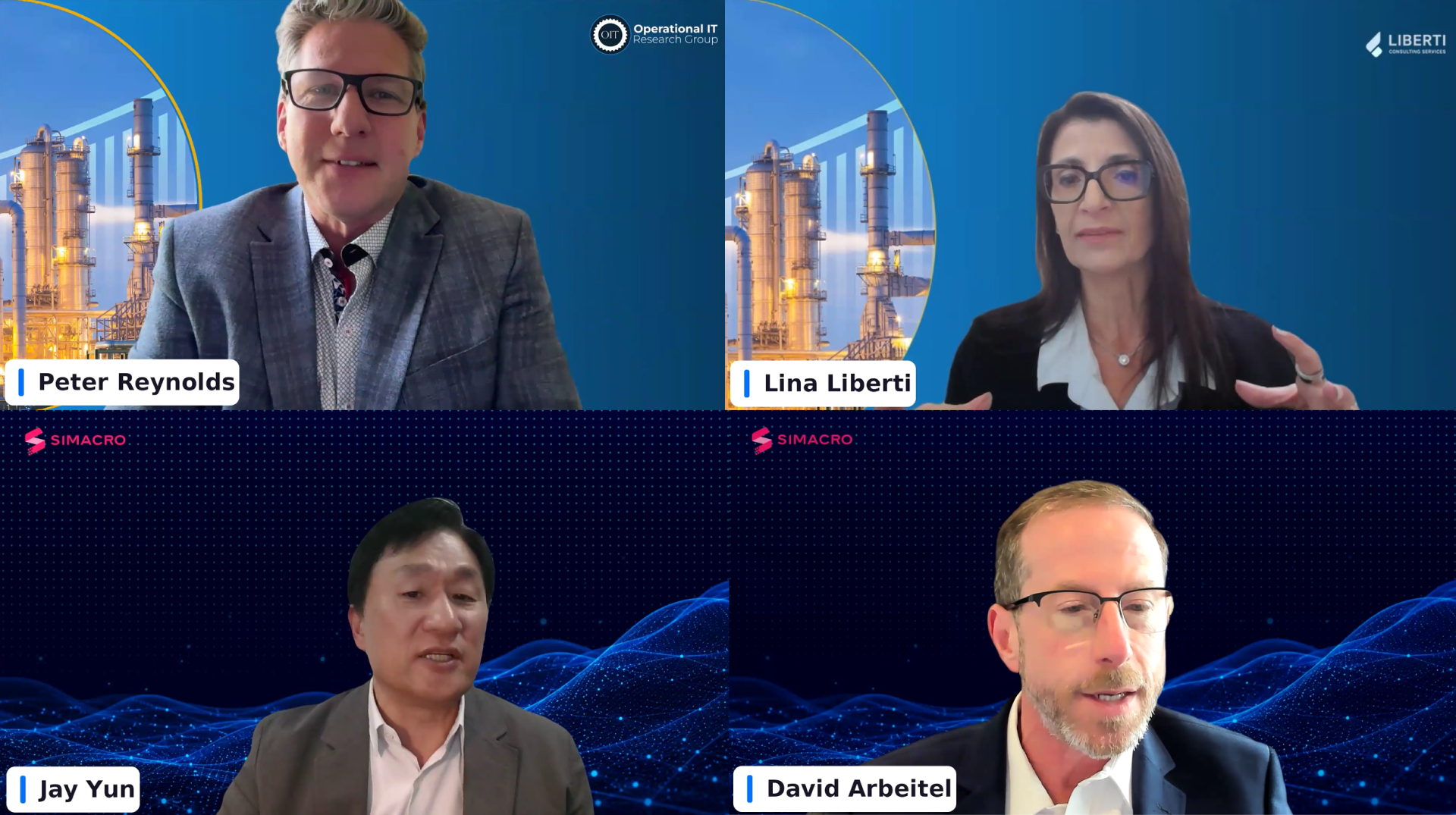
Most energy and chemical companies have accumulated decades of high-quality process models. Few of those models are running continuously in operations. The reasons why, and what a practical path forward looks like were the focus of a recent SIMACRO webinar featuring Peter Reynolds (OIT Research / ARC Advisory Group) and CEO Jay Yun.
The problem isn't the models
As Peter Reynolds framed it, data routinely loses its context as it moves through the asset lifecycle. Owner-operators spend months re-entering and revalidating information across fragmented systems. The result is disconnected models and point solutions that never compound into operational value.
The missing piece isn't better models. It's a runtime layer where physics-based simulators, AI and hybrid models can be orchestrated, validated and kept continuously aligned with live plant conditions.
Where digital twin initiatives actually stall
Proving a model works in a controlled pilot isn't the hard part. Proving it can run continuously across changing feedstocks, aging equipment, evolving targets and different OT environments is where most initiatives break down.
Without a dedicated runtime layer every digital twin becomes another standalone project: custom data mapping, IT/OT approvals and manual revalidation after every change. Jay Yun walked through exactly why this pattern repeats and why the answer isn't a better model. It's a governed operational environment where models can be staged, connected, validated and updated without rebuilding each time.
Why PMV™
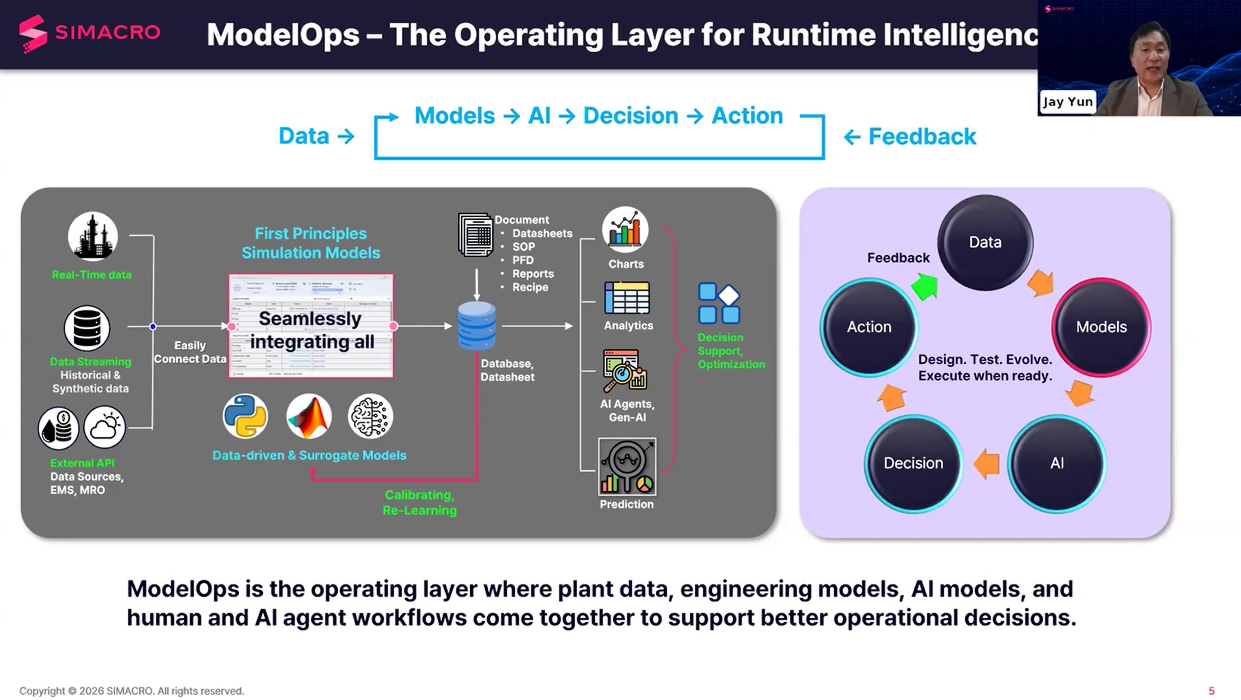
PMV is a scalable unified platform that integrates plant data, engineering models, AI models, and human and AI agent workflows.
PMV™ is SIMACRO's response to this gap. It doesn't replace existing simulators or process models. It wraps them into a shared runtime environment where they become continuously executable, data-connected and accessible beyond the engineering team. Plant data feeds the models. Models work alongside AI. Results flow into operational decision workflows. When conditions change after feedstock variability, equipment aging or a post-turnaround update, models can be recalibrated and redeployed without starting over.
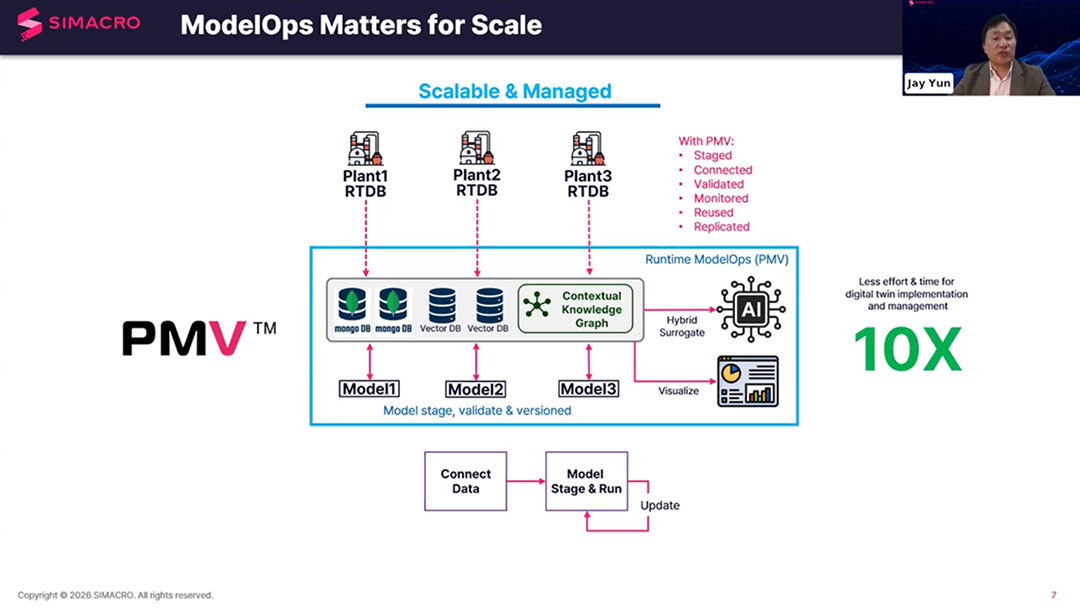
PMV allows models to be staged, connected, validated, monitored, reused, and replicated.
The webinar includes live PMV™ demonstrations across polymer hybrid modeling, green hydrogen, carbon capture and multi-model chaining showing what this looks like in practice across different process industries.
The AI trust question
One of the sharper moments in the discussion was “Would you trust an AI recommendation that cannot be traced back to physics?” The panel got specific about where trust thresholds should be set, why hybrid modeling matters, and how earned autonomy rather than assumed autonomy is the only viable path forward for industrial AI in high-consequence environments.
Watch the full conversation
If you're thinking about digital twin scalability, runtime intelligence, or industrial AI adoption, the full recording is worth your hour.
Access the recording and referenced executive white paper here.
Interested in future webinars? Stay connected through SIMACRO Connect or follow SIMACRO on LinkedIn for upcoming session announcements.
Written by Hyejin Cho
SIMACRO media team | media@simacro.com
