
From Data to Industrial Intelligence: SIMACRO at RUSH Amsterdam
SIMACRO recently attended the RUSH conference in Amsterdam, where industry leaders discussed the future of industrial data, interoperability, and artificial intelligence.
A consistent message emerged throughout the conference: industrial AI cannot scale through software alone. It requires trusted data, shared meaning, open architecture, and security that protects each organization’s intellectual property.
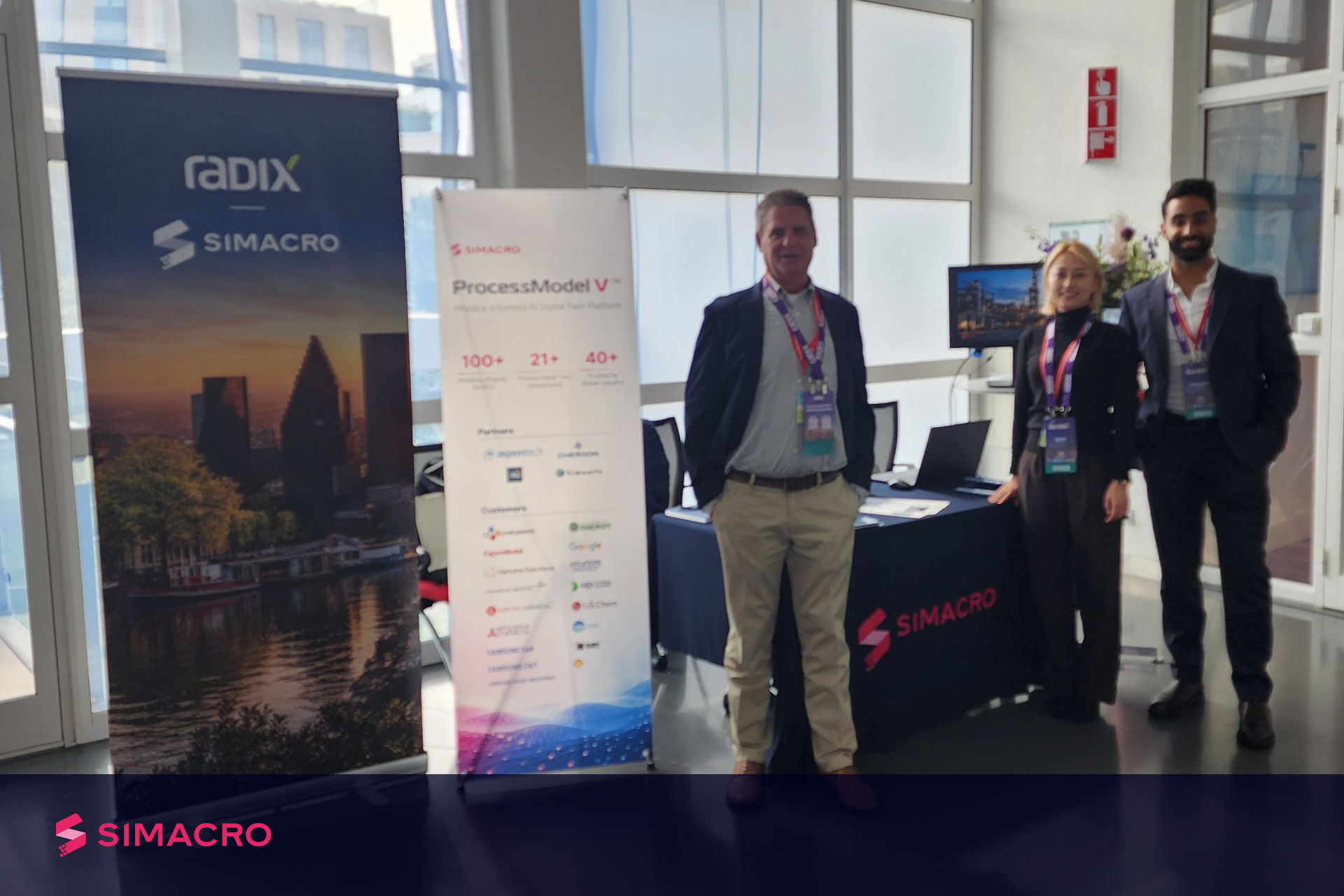
Mike Purcell (our SVP of Sales), Angela Park (our Director of Global Business & Product Management), and Mohamed Barakat (our intern) attend the RUSH conference. SIMACRO was the Bronze Sponsor.
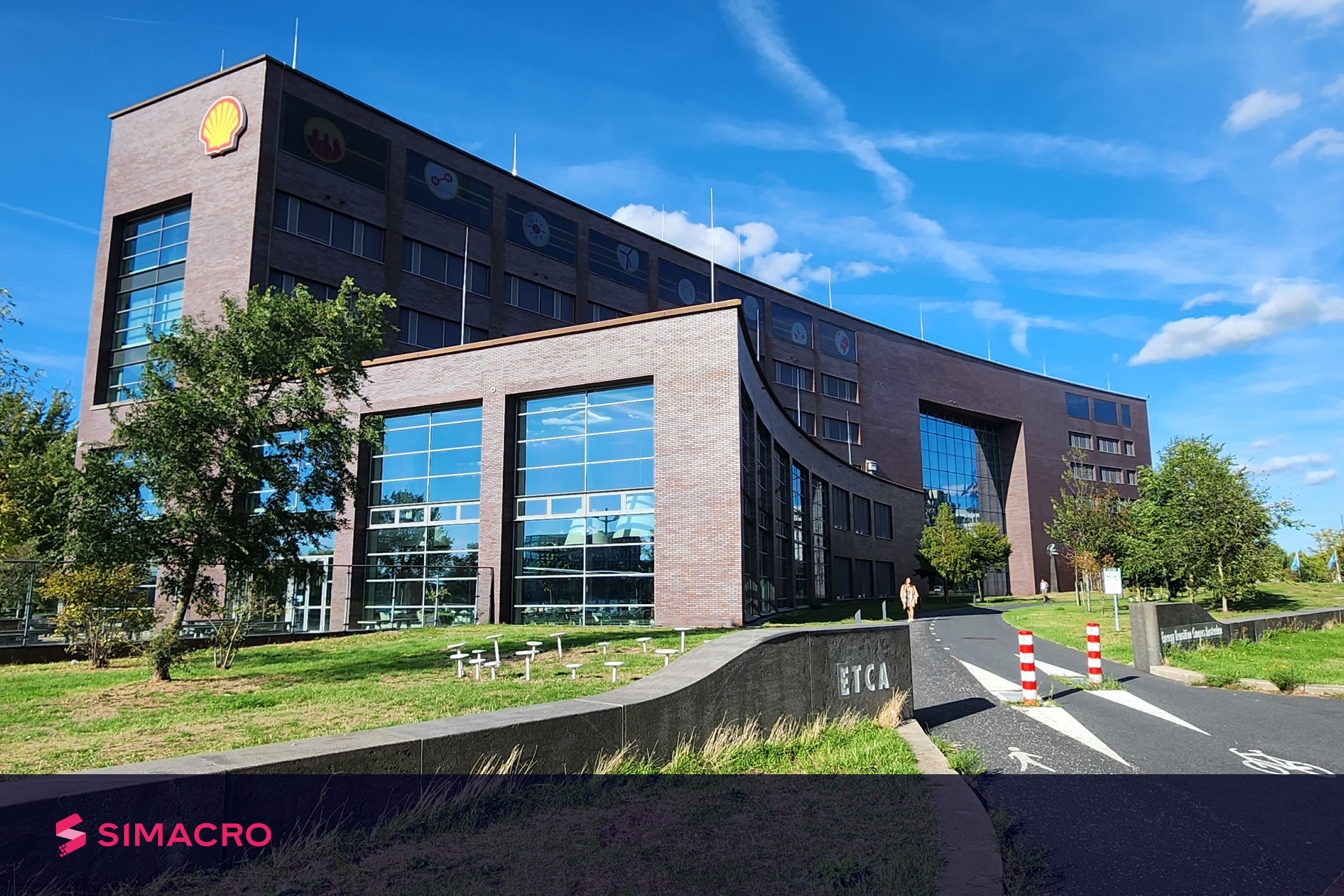

RUSH 2026 took place at Shell’s Energy Transition Campus Amsterdam (ETCA).
Software Changes, but Data Endures
Michel Teughels, Global Operations, Innovation & Strategy Manager at ExxonMobil, shared an important perspective on digital investment.
Short-term investments often focus on software and point-to-point interfaces. These may solve immediate problems, but software changes over time, and integrations are expensive to maintain. Data, however, endures.
Long-term investments should therefore focus on data quality, shared semantics, and contextualization. The objective is to maximize the value of industrial data and establish a foundation for deploying AI securely and repeatedly at scale.
Michel also emphasized that success should be measured only after a solution has been deployed at scale. A successful pilot is valuable, but it does not prove that the technology can operate across multiple assets, teams, and environments. Scaling requires a security model that enables asset owner operators to use their data while protecting their process knowledge and intellectual property.
Recognizing that data and domain knowledge are among a customer’s most valuable assets, PMV™is designed to help customers retain control of both while securely using them across modeling, analytics, and AI workflows.
Interoperability Requires Context
The panel featuring Michel Teughels of ExxonMobil, Dr. Michael Wiedau of DEXPI, and Meaghan Snethlage of VEERUM explored the importance of interoperability.
Connecting data is only the first step. Data must also be validated against operational reality and placed in the correct context before it can support reliable decisions.
The discussion highlighted a practical progression:
Accumulate and connect data.
Validate it against operational reality.
Add context and relationships.
Make the resulting knowledge reusable.
Knowledge graphs connect information from different sources while preserving relationships among equipment, processes, models, and operational data. Without these relationships, AI may have access to large volumes of data but still lack the industrial context required to interpret it correctly.
Standards such as DEXPI provide a common structure for exchanging and interpreting engineering information. Because standardization is essential to interoperability and data contextualization, SIMACRO is a member of DEXPI and supports its vision for open, structured engineering data.
Open Architecture and Digital Resilience
Open architecture can accelerate deployment, reduce duplicated work, prevent vendor lock-in, and allow companies to reuse their data across different technologies.
This matters because the cost of reconfiguration increases significantly when architectural changes affect multiple downstream applications. Standards and open interfaces help organizations remain flexible as technologies, suppliers, and operational requirements evolve.
Digital resilience also requires confidence in how data is managed across different environments. Organizations must be able to control their information, make informed decisions, and take action even as their digital ecosystems become more complex.
This is one of PMV™’s core strengths. From the beginning, PMV™ has been developed as an open platform with long-term sustainability, interoperability, and enterprise adoption in mind.
What This Means for PMV™
The discussions at RUSH closely reflected the core principles of ProcessModel V™.
Industrial organizations already possess valuable operational data, engineering files, process models, and domain knowledge. The challenge is to connect these resources, validate them against reality, and make them reusable across simulation, digital twin, analytics, and AI workflows.
Industrial AI is not only a technology challenge. It requires close alignment among asset owner operators, technology providers, standards organizations, and domain experts. The organizations that move forward successfully will be those that connect their data, protect their knowledge, adopt open standards, and collaborate deeply enough to turn industrial information into scalable intelligence.
PMV™ brings these essential capabilities together in one open platform, providing the foundation for ModelOps and helping industrial organizations deploy, manage, and scale models and AI with confidence.
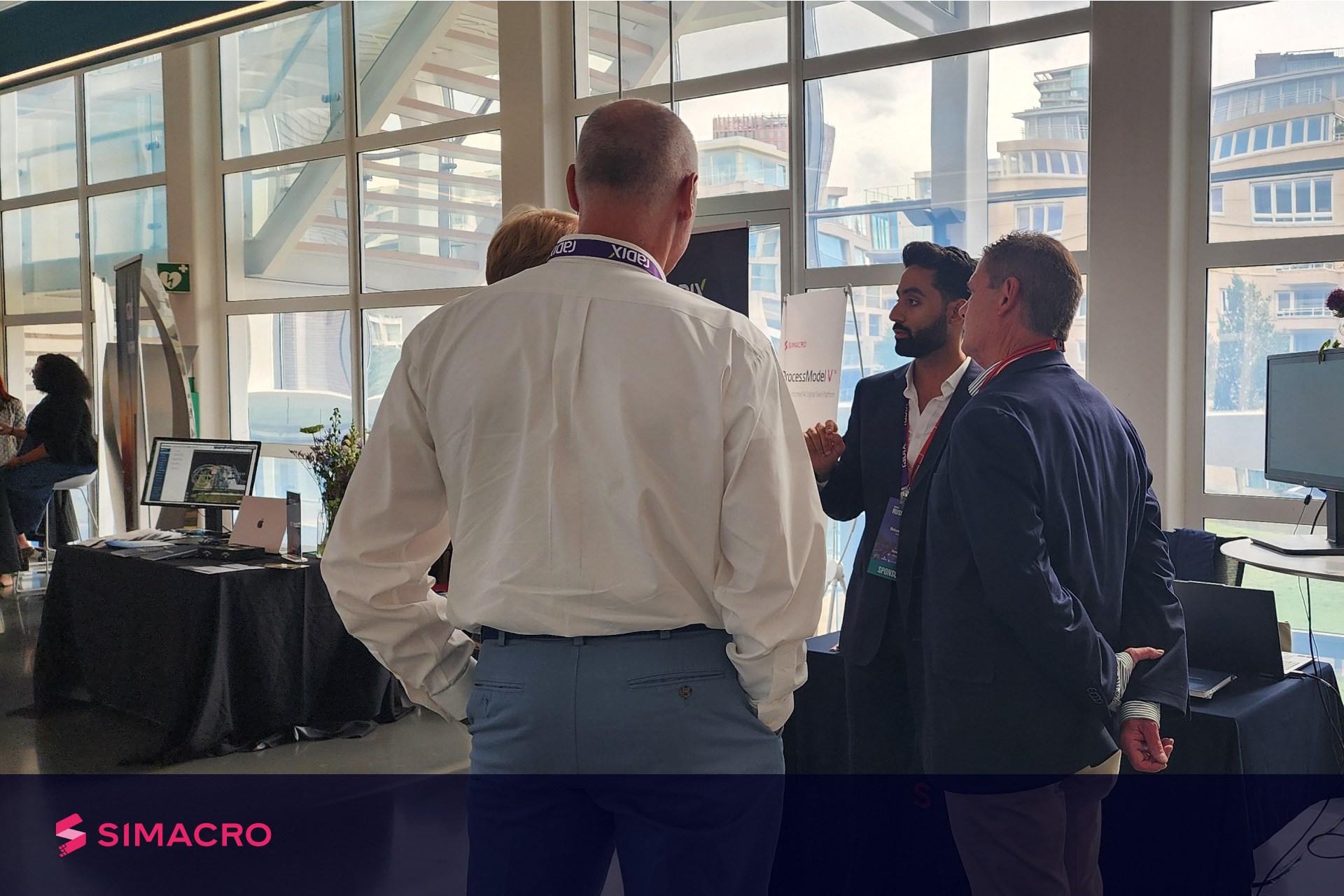
Mike, Mohamed Barakat, and Angela (not pictured here) were at the booth, actively presenting PMV™ demos and engaging in conversations with people at the booth.
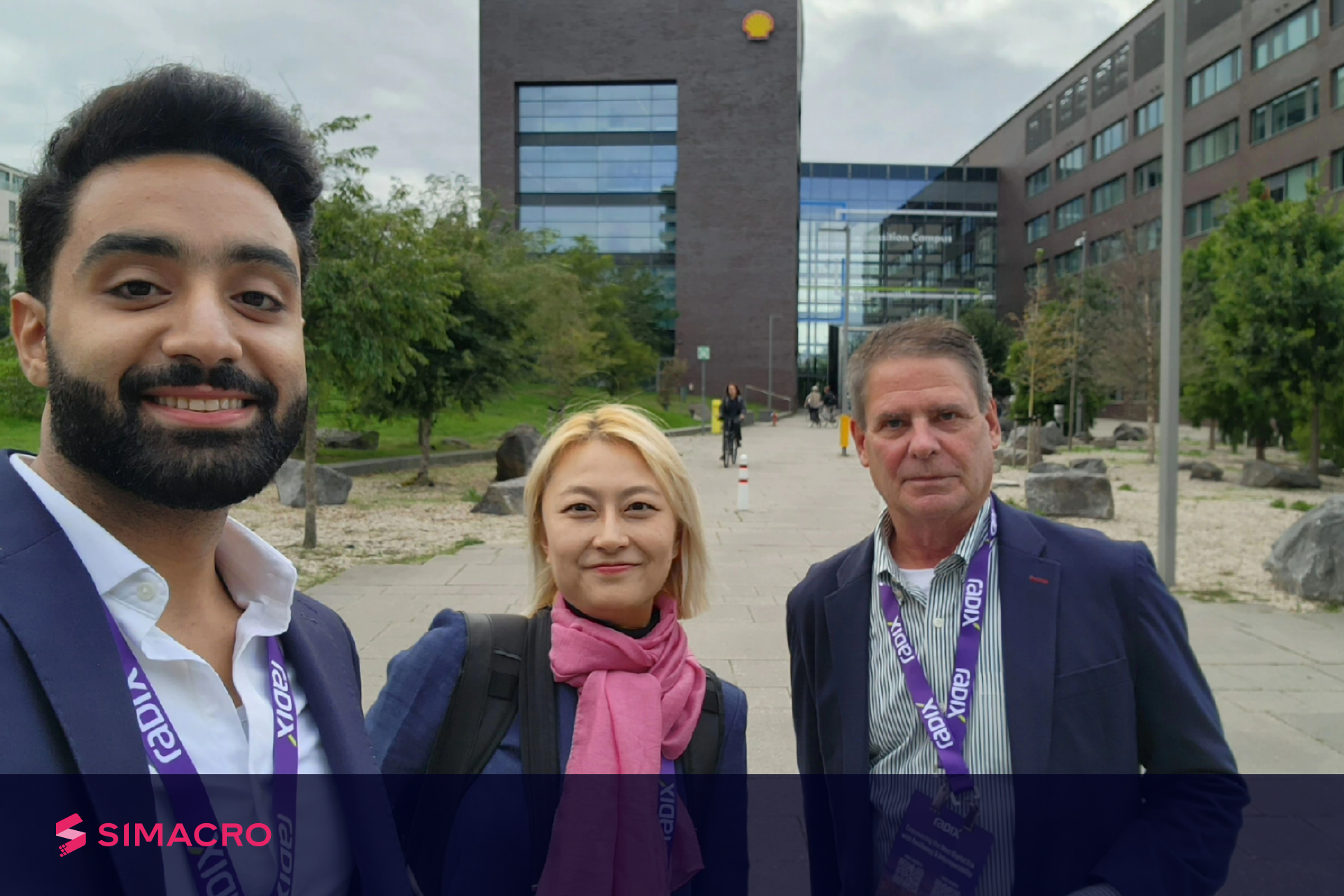
We ended the conference with a group photo on campus before heading to the boat cruise networking event, where we enjoyed lovely views of the city and delicious bitterballen.
Written by Angela Park
SIMACRO media team | media@simacro.com
