
This spring has been an exciting season for SIMACRO as we continued engaging with industry leaders at two major events focused on the future of process innovation, AI, and digital transformation in Houston, Texas.
Following our participation at FDT Kuala Lumpur earlier this March, we had the opportunity to attend both OPTIMIZE 26 and Future Digital Twin & AI USA, where conversations consistently centered around a major theme: the rapid convergence of artificial intelligence, for more accurate simulation, additional valuable process insights, and autonomous operations.
Across both events, it became increasingly clear that the process industries are entering a new era of AI-driven operations, where simulation technologies, operational data, and intelligent systems are becoming more interconnected than ever before.

Vincent, CEO of AspenTech, kicked off the conference announcing 2 big news. SIMACRO’s color polymer index project was mentioned in this session and throughout OPTIMIZE 26.
Driving Industry Conversations at OPTIMIZE 26
The conference opened with keynote presentations from Aspen Technology leadership, offering a compelling look into the future of AspenTech’s ecosystem. AspenTech announced the integration of Aspen Plus® and HYSYS® into a unified platform, HYSYS Plus, while also formally introducing its AI platform, AVA. These developments reinforced the industry’s accelerating shift toward AI-integrated engineering and operational workflows.
Our CEO, Jay Yun, delivered two featured presentations alongside global industry leaders. The first, co-presented with Justin Federici from ExxonMobil, highlighted our collaboration on a carbon capture project focused on advancing sustainable industrial solutions. The second presentation, delivered with Taehong Kim from Samsung C&T Corporation, explored our partnership on Korea’s first off-grid green hydrogen (H2) project.
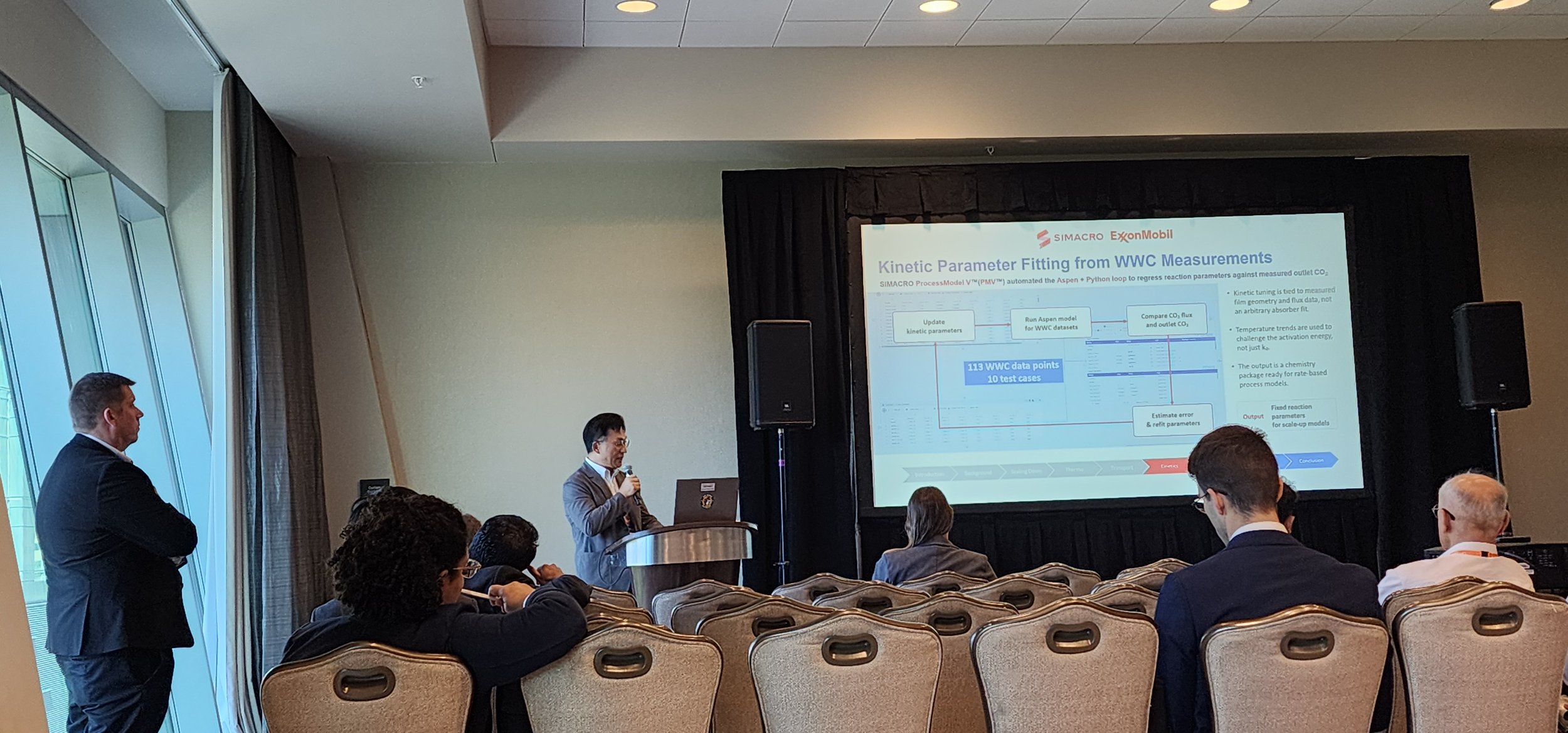
Jay presented how SIMACRO collaborated with ExxonMobil for the Carbon Capture project.
In addition, Ju Weon Lee, Senior Director of R&D at SIMACRO, presented our work on the Color Polymer Index project using hybrid modeling. This real-world case study demonstrated how advanced modeling techniques can generate meaningful operational insights and improve process performance.
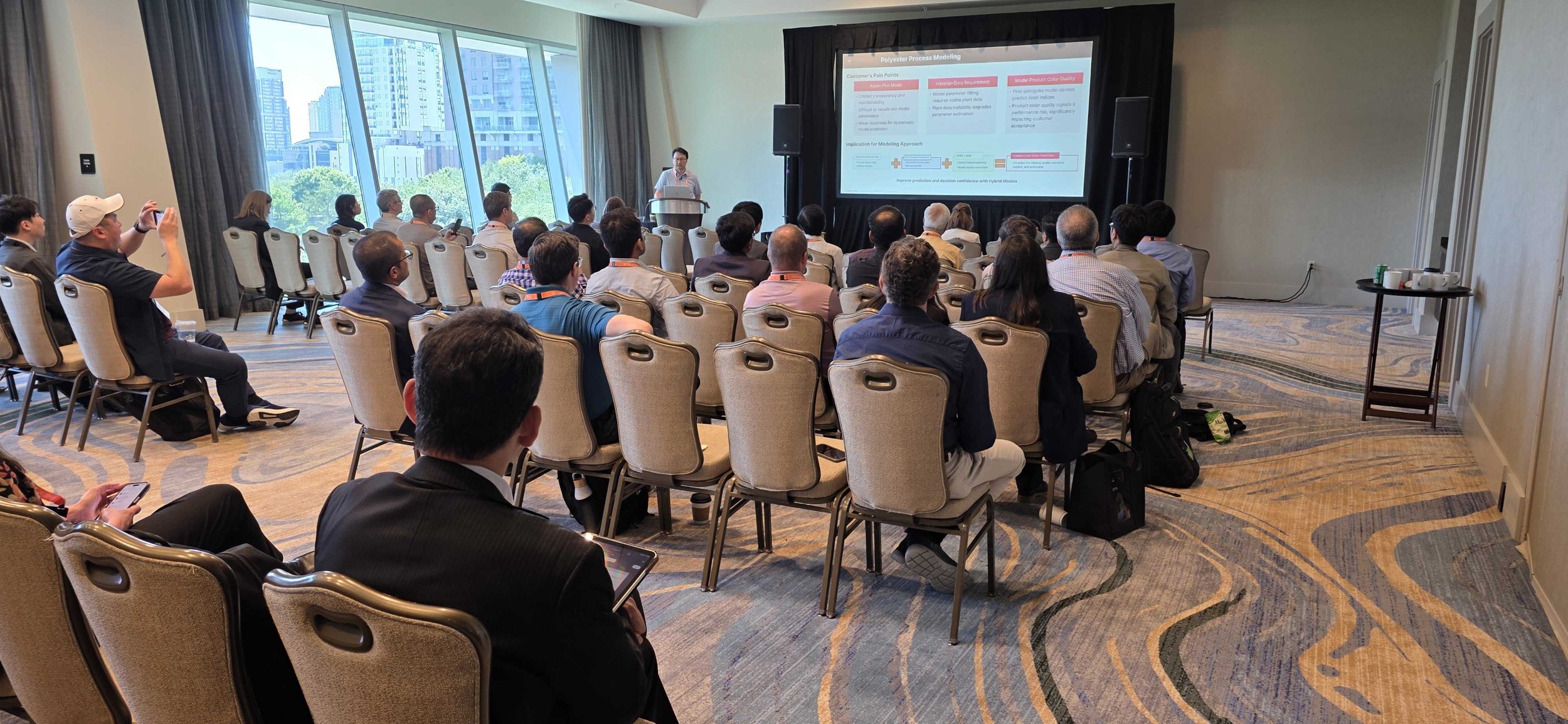
Ju Weon presented a real-world case study, demonstrating the use of hybrid modeling to improve quality control.
These presentations highlighted SIMACRO’s growing role in driving innovative, high-impact projects alongside some of the world’s leading industrial organizations.
Throughout OPTIMIZE 26, hybrid modeling consistently dominated conversations across sessions, technical discussions, and networking events. Attendees showed tremendous interest in how AI can be integrated with traditional first-principles models to unlock deeper process understanding, improve predictive accuracy, and enhance operational decision-making. Session rooms were filled to capacity, and discussions repeatedly focused on practical applications of AI-driven engineering tools.
For SIMACRO, this momentum was especially exciting because we have already demonstrated successful hybrid modeling applications using over three years of operational data to generate valuable process insights and improve product quality control. It was rewarding to see the industry moving toward an area where SIMACRO has already built strong expertise and proven experience.
Showcasing PMV™ and Advanced Modeling Capabilities
At the Innovation Zone, our team spent two full days showcasing ProcessModel V™ (PMV™), SIMACRO’s next-generation platform designed to bridge simulation environments, operational workflows, and AI-driven analytics.
One of the most talked-about capabilities was PMV’s chain-modeling functionality, which enables users to seamlessly deploy and run multiple AspenTech models. PMV currently supports the full AspenTech ecosystem, including HYSYS, Aspen Plus, Aspen Plus Dynamics, and Aspen Custom Modeler.
This capability allows organizations to connect workflows more efficiently while creating more flexible and scalable modeling architectures.
Another feature that generated significant interest was PMV’s patented multi-modeling approach. By running multiple models simultaneously within a unified framework, PMV enables users to create more accurate mirrored digital twins that help reduce the operational gap between design intent and real-world plant performance.
The strong level of engagement throughout the Innovation Zone reinforced how quickly the industry is moving toward more intelligent, integrated, and AI-enabled process solutions.
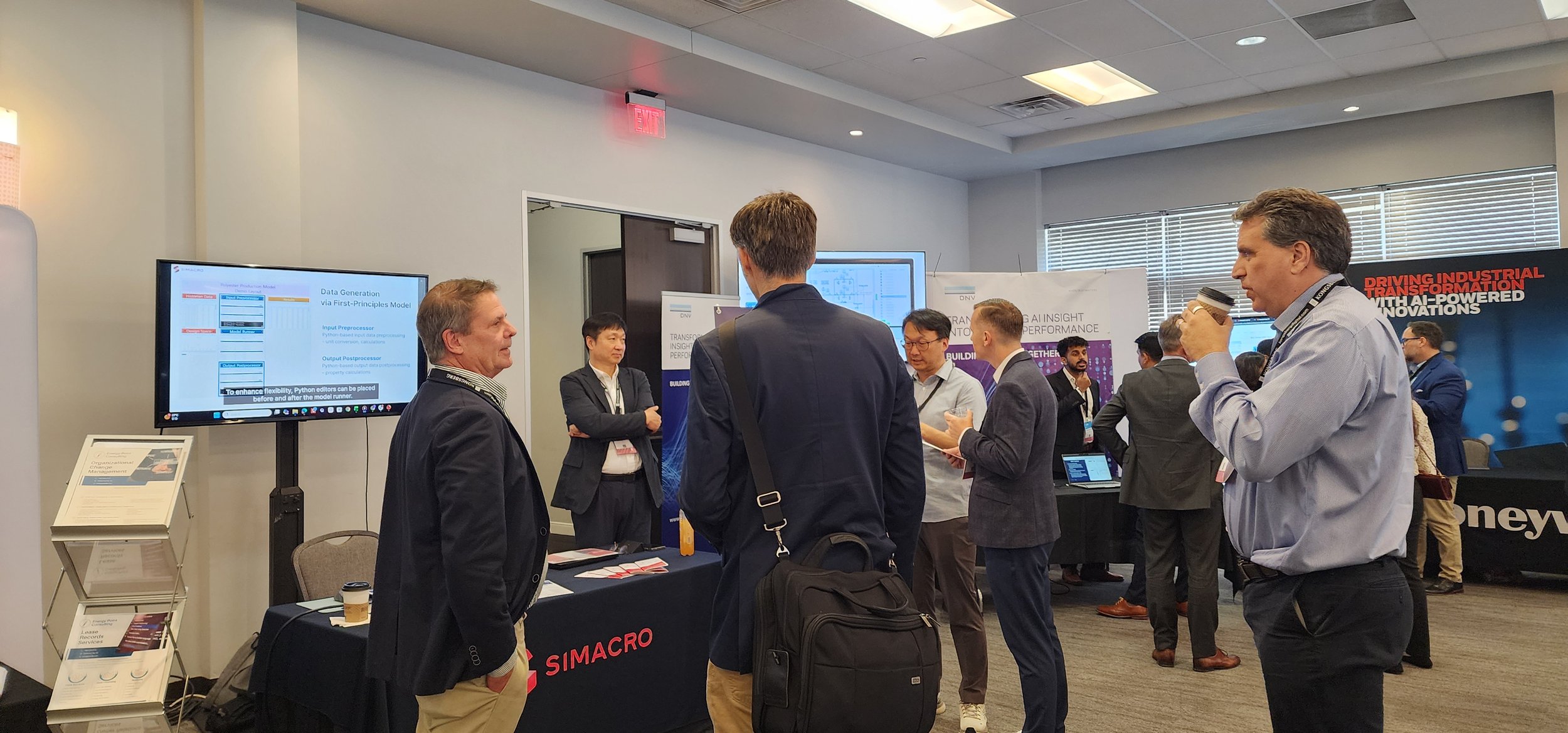
Mike Purcell (our SVP of Sales), Wonseok Lee (our EVP), Ju Weon Lee (our Sr. Director of R&D), and Angela Park (our Director of Global Business & Product Management - not pictured here) were at the booth, actively presenting PMV demos and engaging in conversations with people at the booth.
Continuing the Momentum at FDT USA
Alongside OPTIMIZE 26, SIMACRO continued those conversations at FDT USA, our second Future Digital Twin event of the year following our participation in FDT Kuala Lumpur earlier this March.
It was great to reconnect with familiar faces while also making many new introductions throughout the conference. The event brought together a strong network of industry leaders, with a particularly large presence from Chevron and ExxonMobil, creating an engaging environment for discussions around the future of digital transformation and industrial AI in the heart of Texas.
Our team spent the day at the booth showcasing ProcessModel V™ (PMV™) and discussing the growing role of AI-driven process solutions. Conversations throughout the event reflected a clear industry focus on how organizations can better integrate simulation technologies, operational data, and artificial intelligence to improve performance and decision-making.
A major highlight of the event was a presentation by our CEO, Jay Yun, titled:
“The Birth of Agentic AI for Chemical Processes: Hybrid Models, Process Simulators, and the Future of Autonomous Operations.”
The presentation explored how AI and hybrid models can enable more autonomous and intelligent industrial operations. The strong level of engagement from attendees reinforced how rapidly the industry is embracing AI-enabled operational strategies.
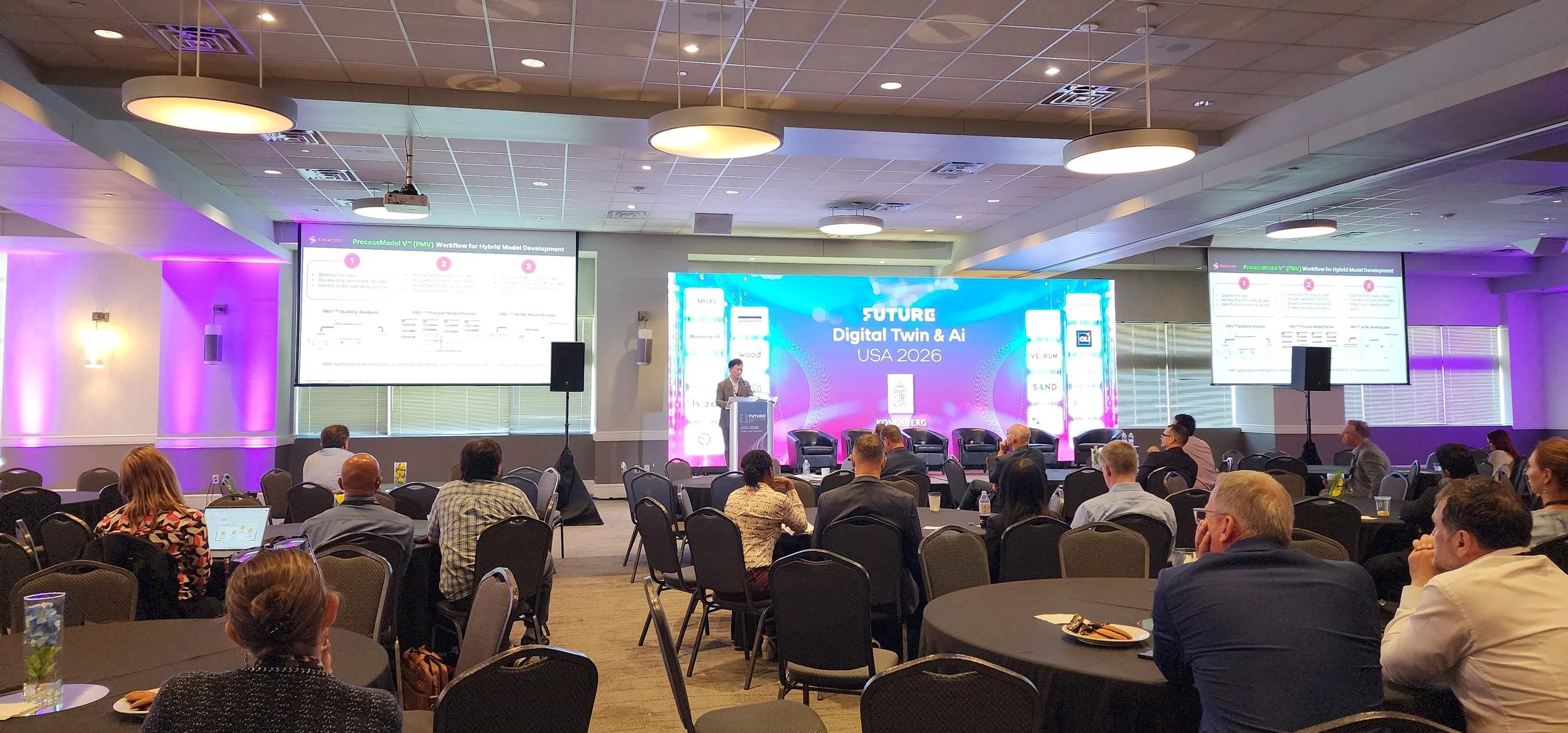
Jay presented another speech at the FDT conference.
Beyond the technical discussions, one of the most rewarding aspects of FDT Texas was the opportunity to strengthen relationships across the industry. The day concluded with an intimate networking session featuring a curated selection of whiskeys and charcuterie boards — the perfect Texas-style ending to a productive and exciting event.
Looking Ahead
Both OPTIMIZE 26 and FDT USA reinforced just how quickly the process industries are evolving to embrace AI, hybrid modeling, and autonomous operational solutions.
The enthusiasm, engagement, and quality of conversations throughout these events made one thing clear: the future of industrial innovation will be built on the integration of AI, accurate simulation, and advanced process intelligence across many industry sectors.
SIMACRO is excited to continue contributing to that transformation through collaboration, innovation, and the continued evolution of PMV™.
If you’d like to learn more about hybrid modeling, chain-modeling, multi-modeling, or agentic AI for chemical processes, we’d love to connect. Follow us on LinkedIn, send us a message, or reach out to discuss how PMV™ can support your process and digital transformation initiatives.
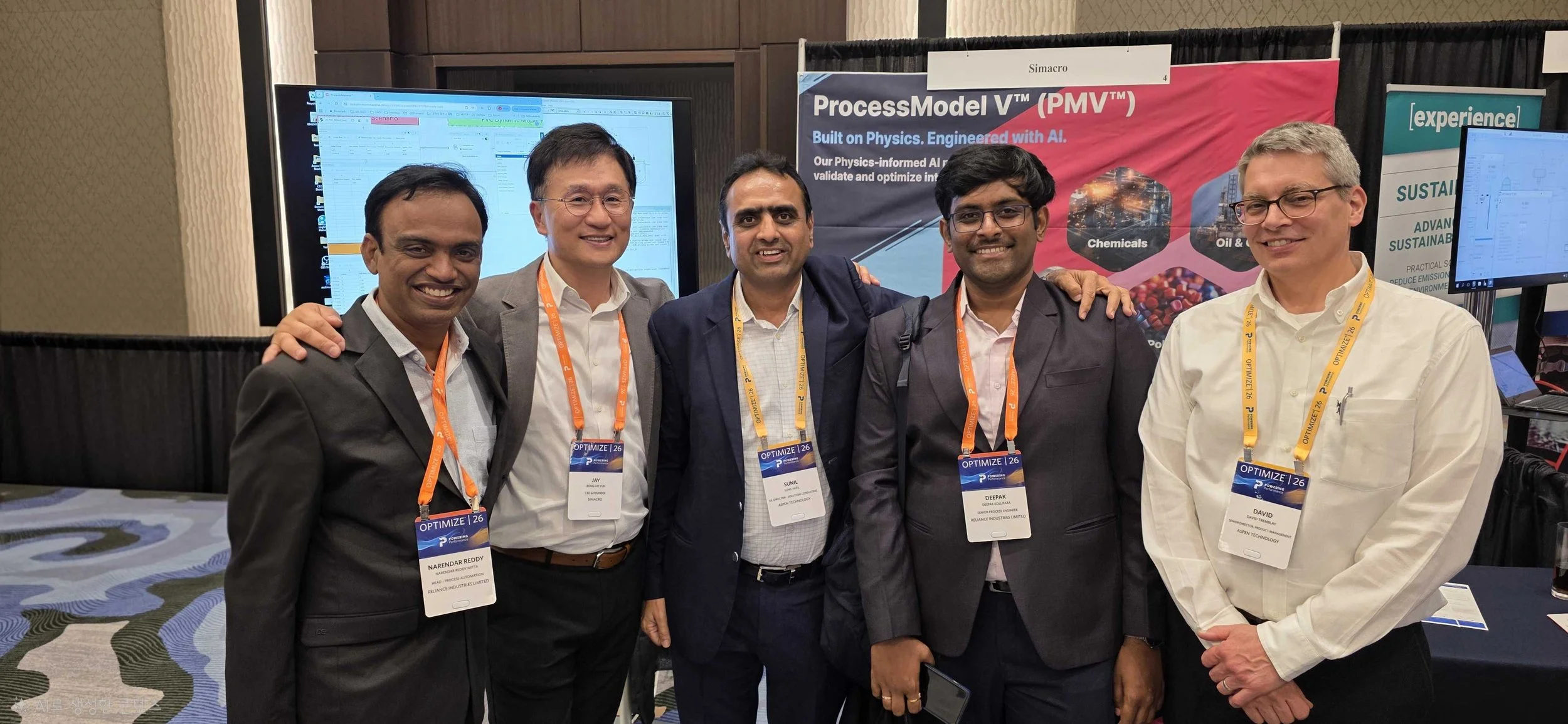
Pictured here from left to right: Narendar Reddy (RELIANCE), Jay Yun (SIMACRO), Sunil Patel (AspenTech), Deepak Kollipara (RELIANCE), and David Tremblay (AspenTech)
Written by Angela Park
SIMACRO media team | media@simacro.com
